What the eye cannot see: A decision that will shape the coming decades
Propagation material in fruit growing: Why certified planting material makes a difference for decades.
Choosing propagation material is one of the most important decisions in professional fruit growing. Whether certified propagation material or C.A.C. material is used affects plant health, varietal authenticity and the long-term productivity and profitability of a fruit orchard. At the same time, illegal propagation poses significant risks to yield, quality, and traceability. This article explains the differences and shows why the origin of scions and rootstocks can be crucial for decades to come.
The economic decision is often easier to make when the key aspects of choosing propagation material are summarised. The first question that often arises is: what exactly do 'certified' and 'C.A.C. material' mean, and how do these terms relate to 'illegal propagation'?
What is certified propagating material?
'Certified propagating material' means, first and foremost, that the plant material has been found, based on official inspections and laboratory tests, to be free from certain viruses and other relevant pathogens listed in the applicable regulations (RNQP, Regulated Non-Quarantine Pests). The mother plants in the cutting gardens are regularly screened for viruses, phytoplasmas and other pathogens that can cause significant long-term economic damage in fruit growing.
These are not merely pathogens that cause visible symptoms on fruit or leaves. Of particular importance are diseases that impair the vitality of the trees, weaken growth, shorten the lifespan of an orchard and significantly reduce yield. Many of these infections go unnoticed in the first few years after planting. It is only later that effects such as uneven growth, poor fruit set, reduced fruit size, higher drop rates or premature ageing of the orchard become apparent. For this reason, certified mother plants and scion orchards are regularly tested for a range of economically significant pathogens to prevent their occurrence.
What additional benefits does certified planting material offer?
However, the term 'certified' goes much further. In addition to being virus-free, certification in the nursery also includes checks on varietal authenticity, documented provenance, regular health inspections, compliance with isolation regulations and the use of official plant passports. Together, this forms a systematically structured and fully traceable system. Certified material therefore offers a significantly higher level of security and transparency throughout the entire production chain.
Nurseries that propagate fruit trees from the Artevos range are obliged under their licence agreements to use certified propagating material. This ensures that propagation is based on controlled and documented sources and that the high standards regarding plant health, varietal authenticity and traceability are met.
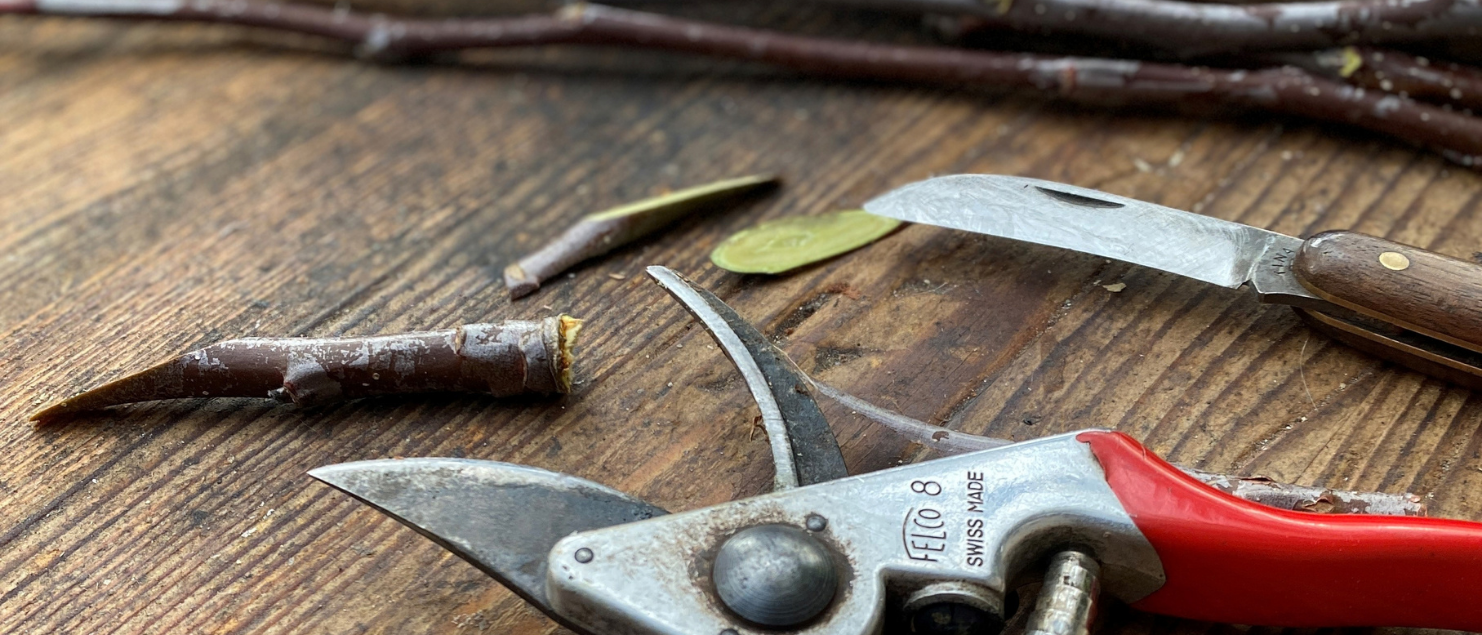
In the cutting gardens from which the nurseries source their certified scions, professional pruning tailored to propagation takes place, along with specially adapted plant protection measures. As the trees do not need to expend energy on fruit set and yield, different plant protection strategies, spraying schedules, and waiting periods can be applied compared to commercial orchards.
Important to note: Even material that was originally virus-free can lose this status through repeated self-propagation, even if it was certified several years ago.
What does C.A.C. material mean?
Growers can also choose so-called C.A.C. material ('Conformitas Agraria Communitatis') for planting. This must meet the European Union's minimum requirements and may be legally marketed. Here too, basic requirements regarding varietal authenticity and plant health apply. However, the system is subject to significantly less stringent controls than the certified propagation system.
C.A.C. material is therefore not automatically virus-free. Traceability and compliance with isolation regulations are also subject to less stringent rules. Nurseries often purchase certified propagating material but market it as C.A.C. material because they do not wish to meet the additional requirements of the certification scheme, for example regarding isolation distances, inspections, traceability or labelling. In the case of new cultivars, only C.A.C. material is often initially available whilst the process of establishing propagation and achieving virus-free status is still ongoing.
What is meant by illegal propagation?
'Illegal propagation' refers to the propagation of protected varieties without the appropriate licence or without the consent of the rights holder. This is often accompanied by the use of propagation material of unknown or uncontrolled origin. Official scion-cutting nurseries supply scions of a variety exclusively to authorised licence holders, but not to businesses that propagate without a licence.
What risks does illegal propagation material pose?
Certified and legally distributed grafting scions come from controlled sources. This builds trust throughout the entire value chain. Modern, high-yield varieties are often available exclusively through this channel. Compliance with plant variety rights and the payment of licence fees also ensure the financing of breeding work, which often takes decades. Conversely, illegal propagation not only harms fruit-growing businesses through increased quality and health risks, but also breeders, whose intellectual property is disregarded.
Errors can also occur in rare cases during the propagation process. However, as the certified system is fully traceable, sources of error can be identified, rectified and, where necessary, compensation arranged. With uncontrolled sources, this is practically impossible. Faulty varieties or contaminated material can therefore remain in circulation undetected for years.
Why do some EU countries promote the use of certified planting material?
In several EU countries, the use of certified planting material is specifically promoted as part of current agricultural policy, including Hungary, France, Italy and Romania. In these countries, significantly higher standard unit costs or flat-rate payments per hectare are often applied for the planting of certified material than for conventional C.A.C. material. This partially or even fully offsets the higher purchase price. Alternatively, applicants receive additional points as part of the funding assessment. Those who use certified material therefore often have a better chance of being approved for investment funding.
Conclusion: The quality of a fruit orchard begins with the propagation material
What remains invisible to the naked eye at the time of planting often only becomes apparent a decade later: in the yield, in the uniformity of the orchard, in the lifespan of the trees and, ultimately, in the economic predictability of a farm. This is precisely why sustainable fruit growing does not begin with the first harvest, but rather with the choice and origin of the propagation material.
Discover the full Artevos range: varieties